Brilliant Basic asked me to contribute my creative technology expertise to an ambitious pavilion installation at the World Economic Forum in Davos, showcasing the latest work from Infosys’ R&D Labs in emotional and tactile computing. I led the creative technology team in creating two installations with distinct visual approaches and technical requirements.
“Attract” was a lighting installation designed to create street appeal, draw visitors into the venue and lead them towards the “Connect & Engage” experience.
Zone: Attract
We built a pseudo-volumetric “holographic” display from a dense, three-dimensional array of 10,000 LEDs arranged within a 2 × 2 × 1 m volume. Every LED was individually addressable and mapped to 3D animation, with RGB colour control. The array presented abstract visualisations of the event’s key topics, creating an eye-catching window display on the approach to the main WEF venue.
Zone: Connect & Engage
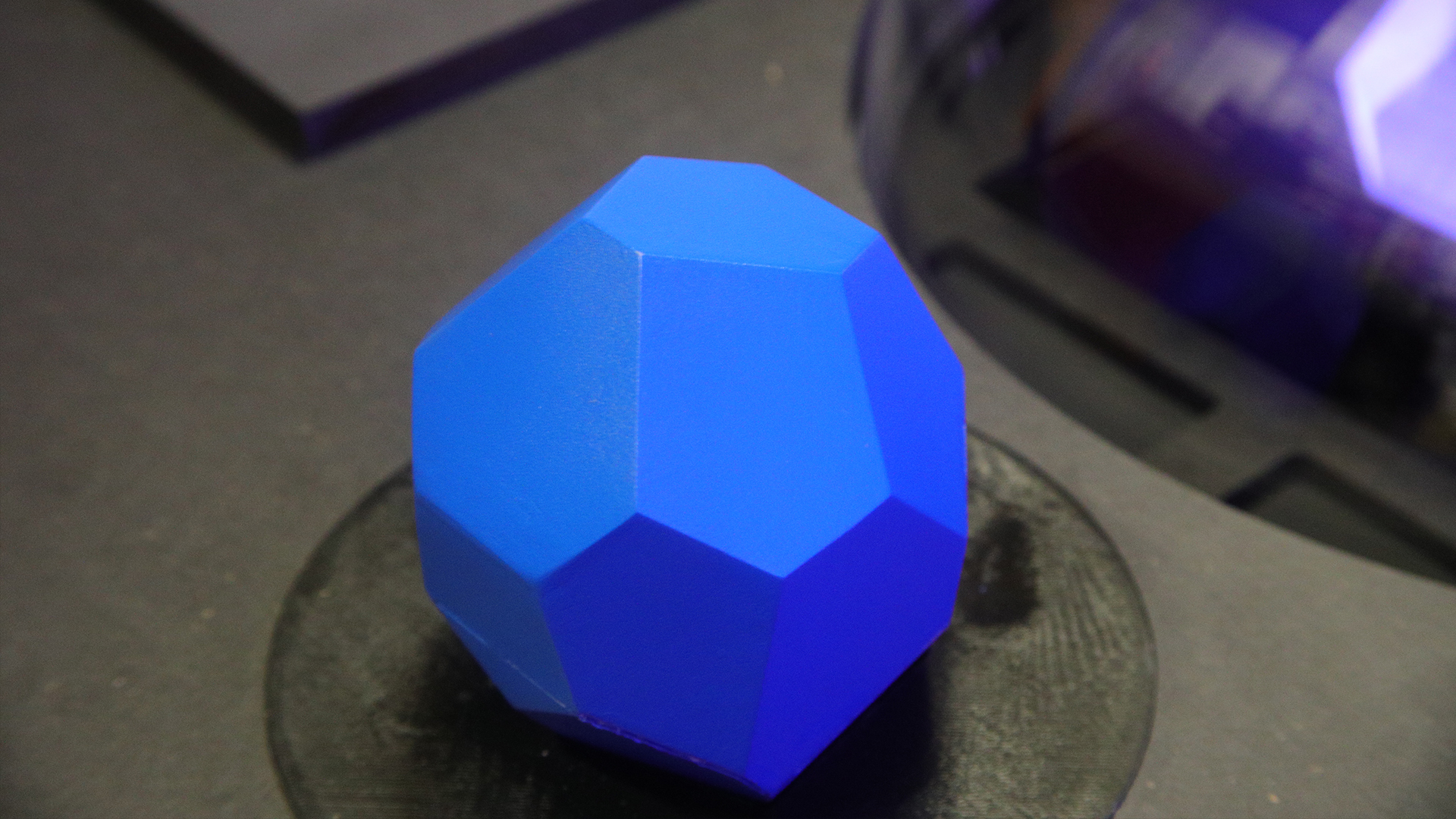
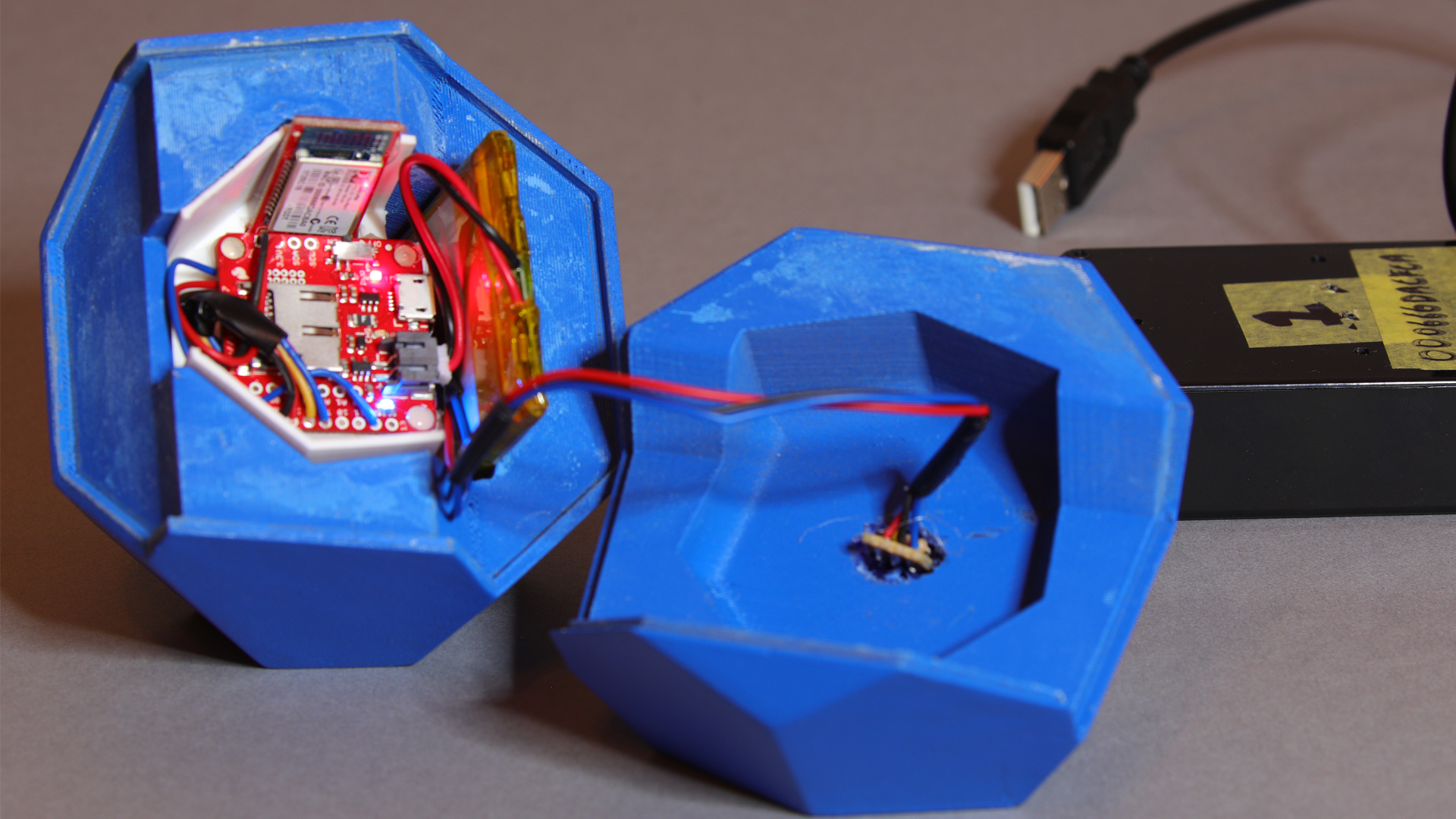
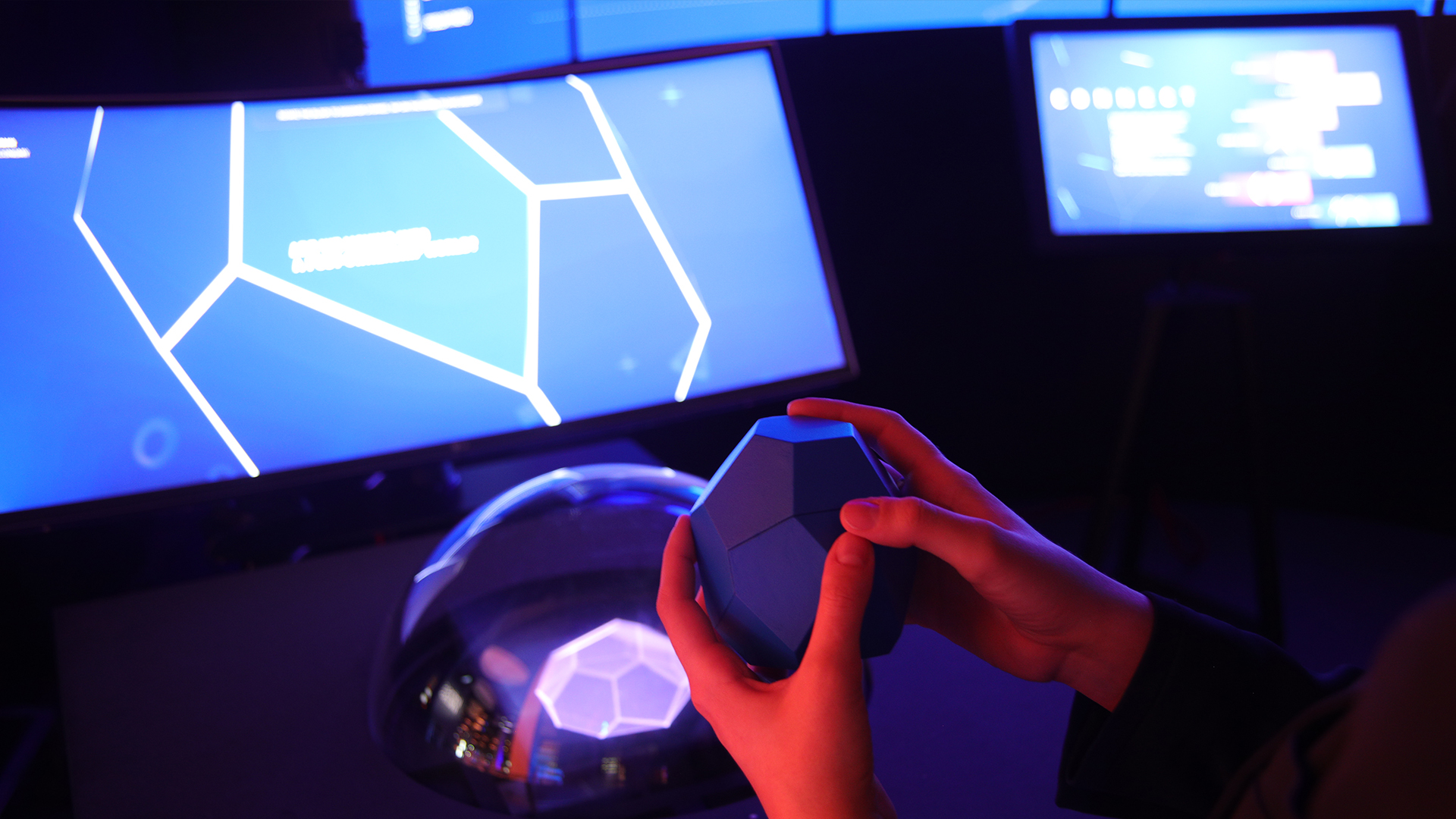
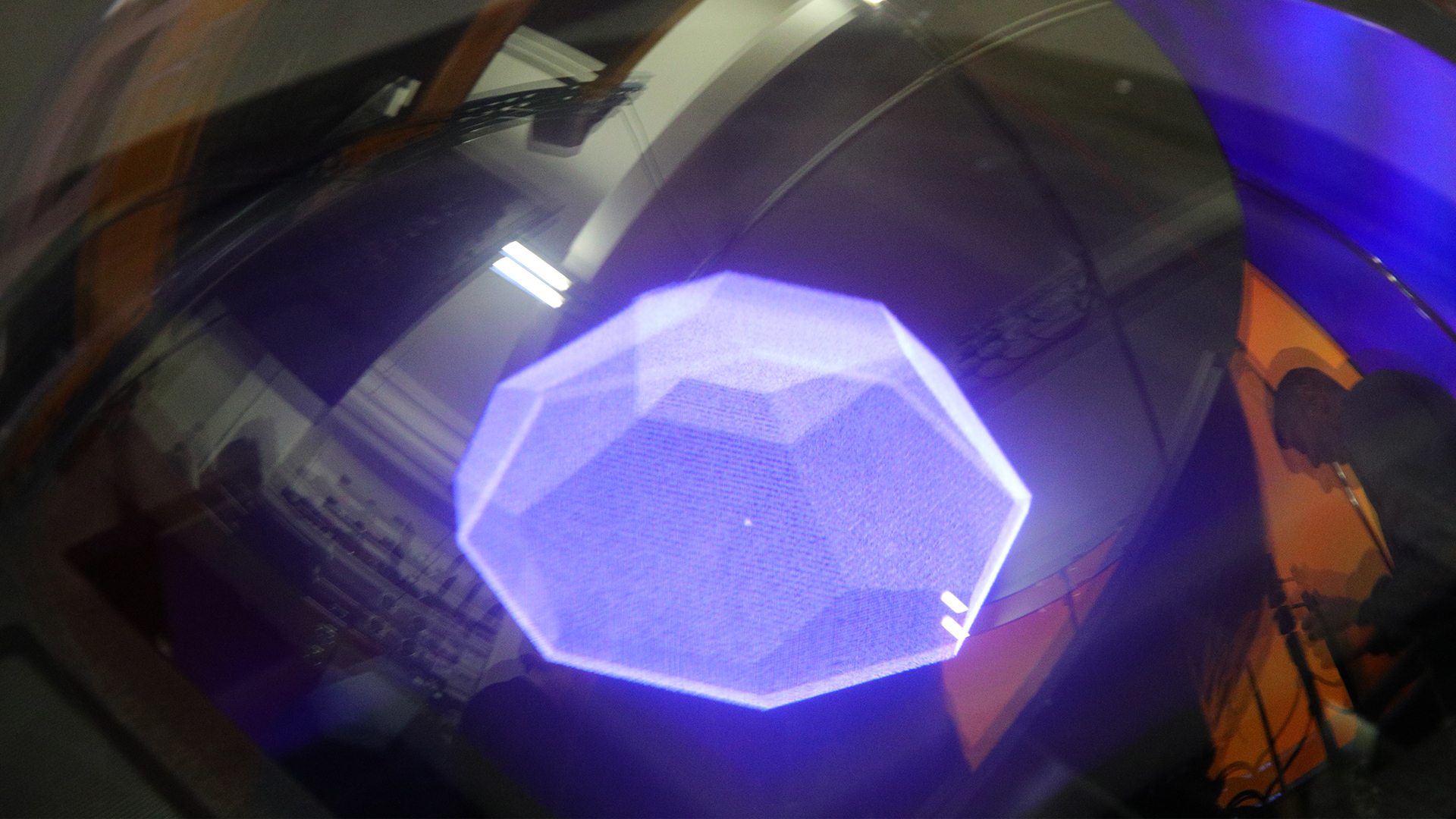
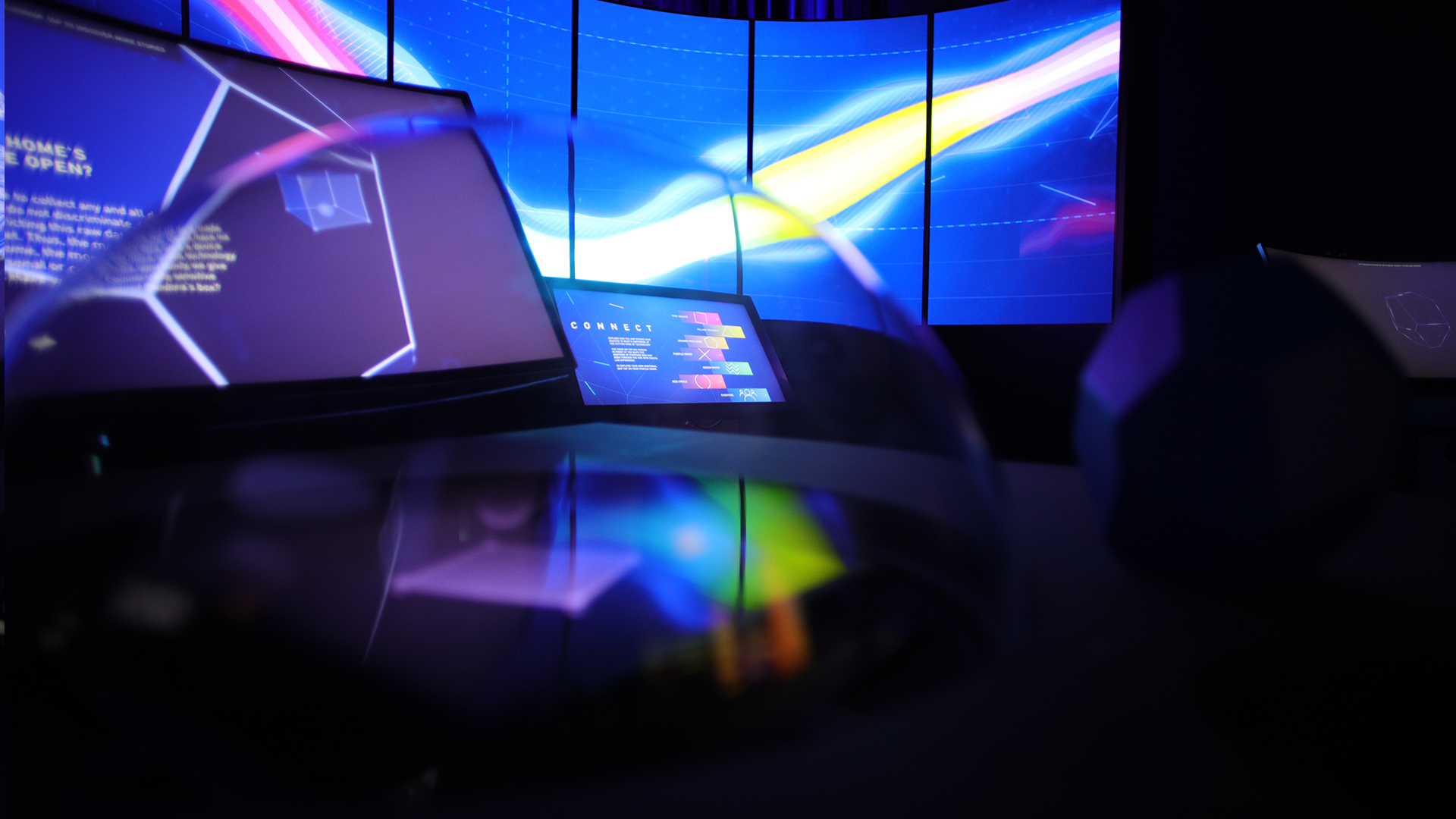
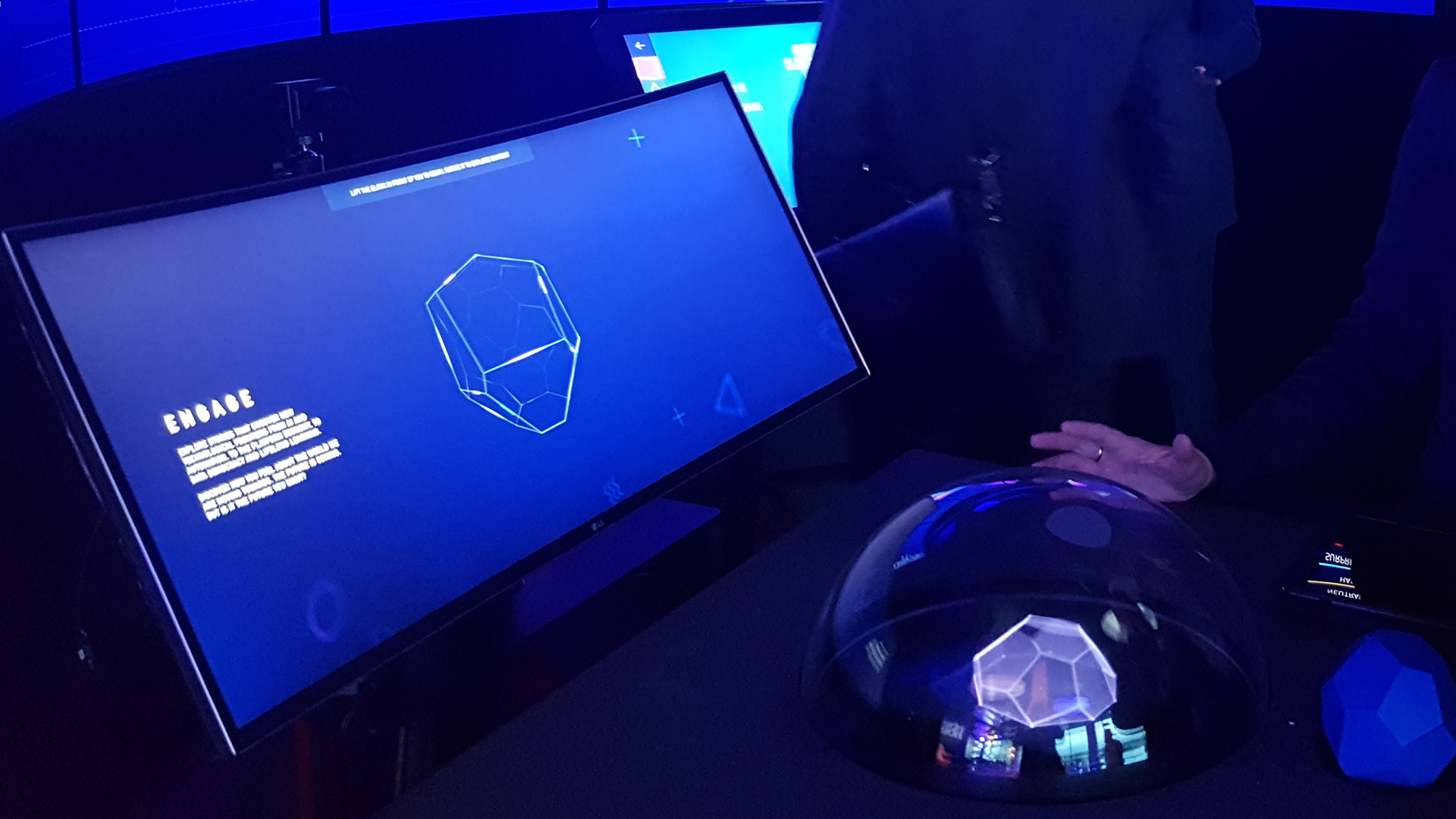
The second installation, “Connect & Engage”, used state-of-the-art curved OLED screens and swept-volume, persistence-of-vision “holographic” displays to create a high-tech visual aesthetic. All narrative and interactive content was linked across three displays, with visitors navigating the experience through a custom, 20-sided wireless tactile controller.
The content was deliberately designed to elicit an emotional response. As visitors interacted with it, cameras tracked their engagement, and emotional facial coding measured their reactions throughout the experience. These measurements were used to generate a visual data artefact showing each participant’s emotional response to the content. The results appeared on the large curved OLED screen, where participants could filter them and share them via social media. I was responsible for programming the API linking the tactile controller and facial analysis system, making their data available to the visual animation team to control the displays through TouchDesigner.
I designed and fabricated the electronic hardware for these 3D-printed “crystal” controllers. Each physical facet was mapped to the corresponding facet of a digital 3D crystal shown on the “holographic” and 2D displays, maintaining visual alignment between the handheld controller and its on-screen representation. The controllers incorporated tap-sensitive interaction and tactile control: rotating the crystal in the hand selected content, while tapping its faces triggered playback.