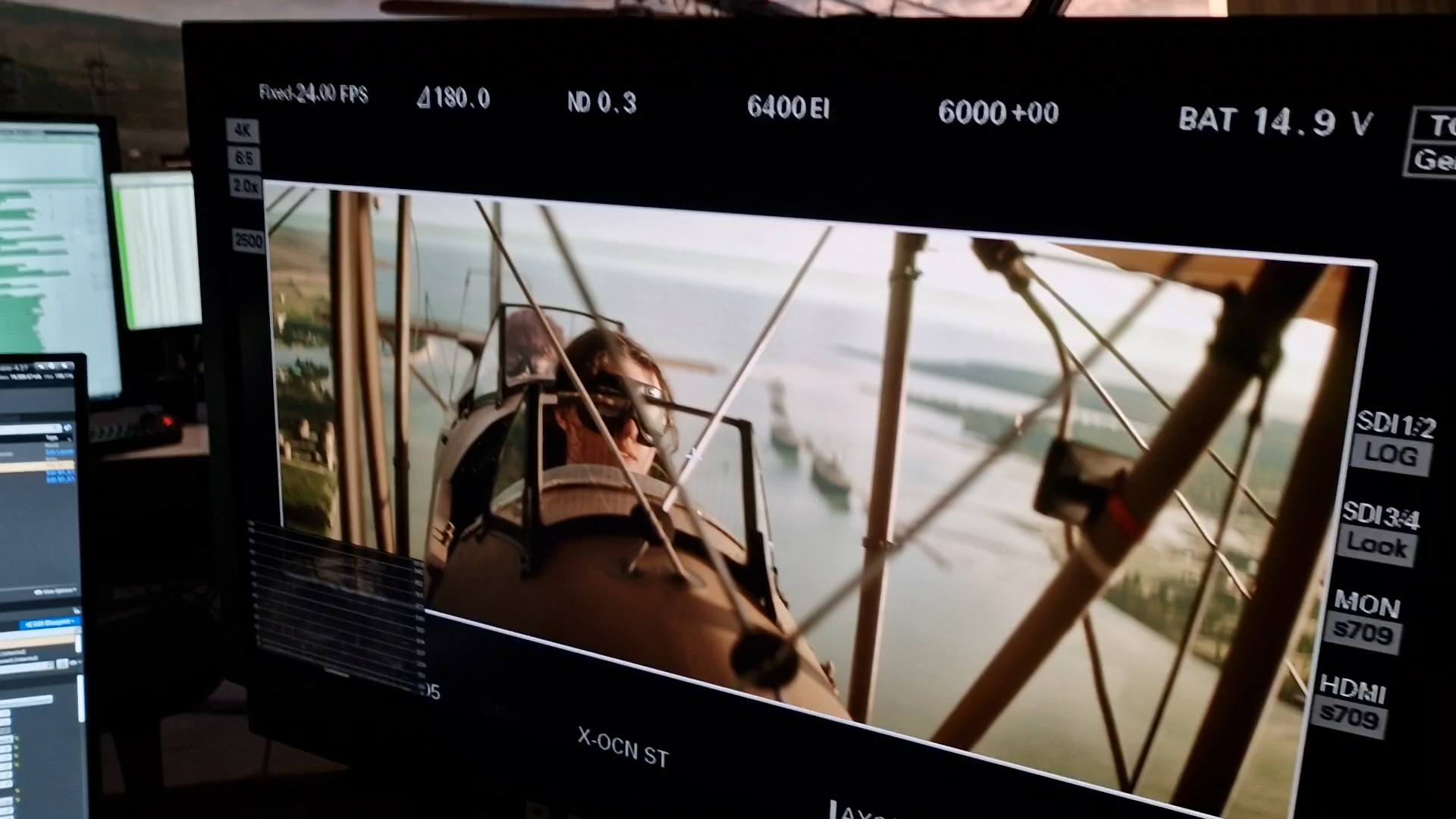
As Territory Studio’s Creative Technology Director and Virtual Art Department (VAD) Director for virtual production, I led the technical development and world-building for the pre-visualisation of a film set in Britain during the Second World War. The environments needed to be historically accurate down to the year and month; an opportunity to combine detailed historical research with ambitious real-time filmmaking.
Working with the production designer, we identified historical maps documenting the wartime landscape. Our modelling and environment teams then used Houdini and Unreal Engine to reconstruct entire towns and riverbank environments, adapting modern digital elevation models and street maps to recreate their wartime appearance.
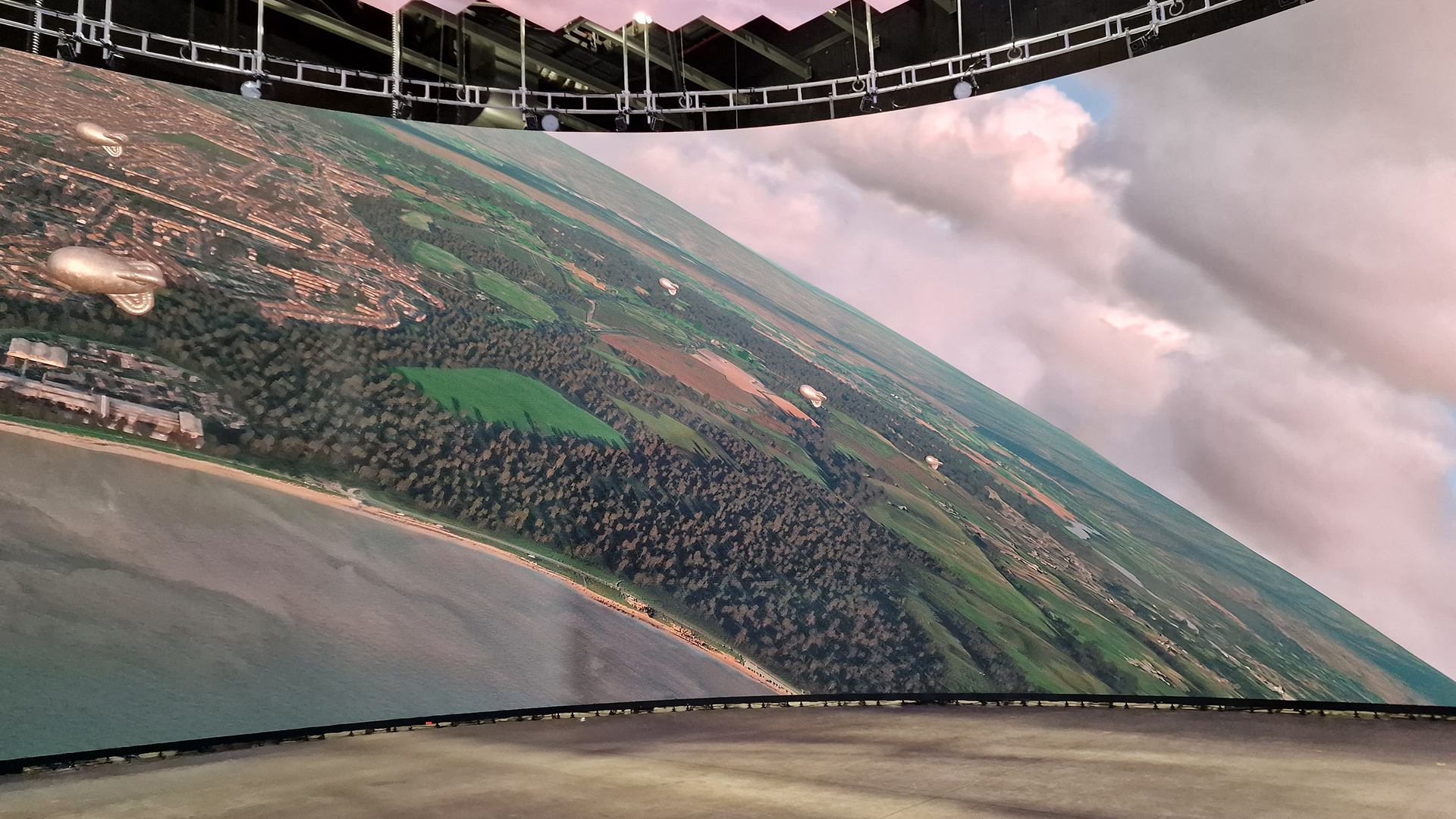
Buildings were recreated to photorealistic standards alongside aircraft, barrage balloons and other wartime features. Recognisable bomb-damaged buildings required particular attention, with their condition carefully matched to contemporary reference photography.
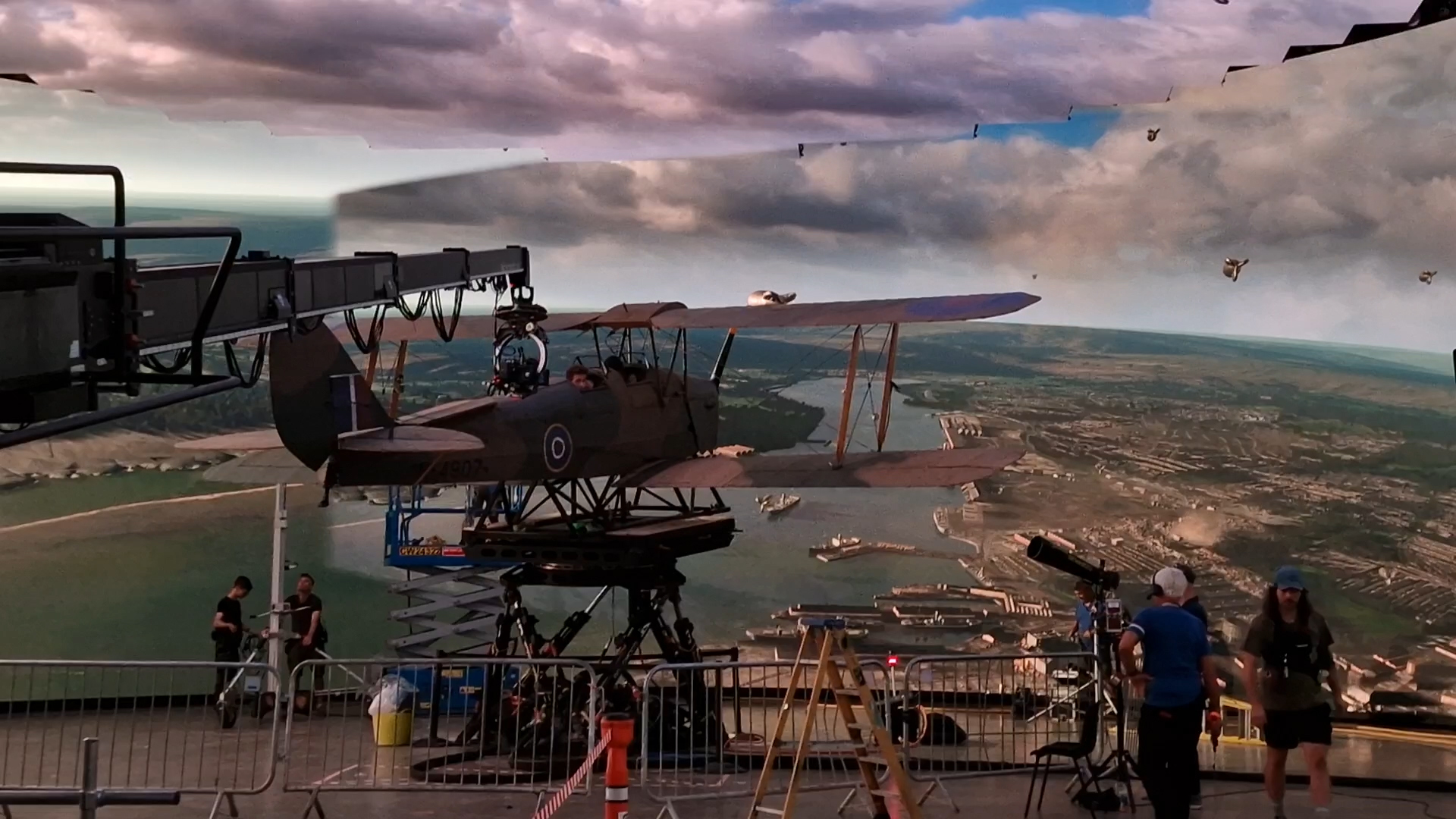
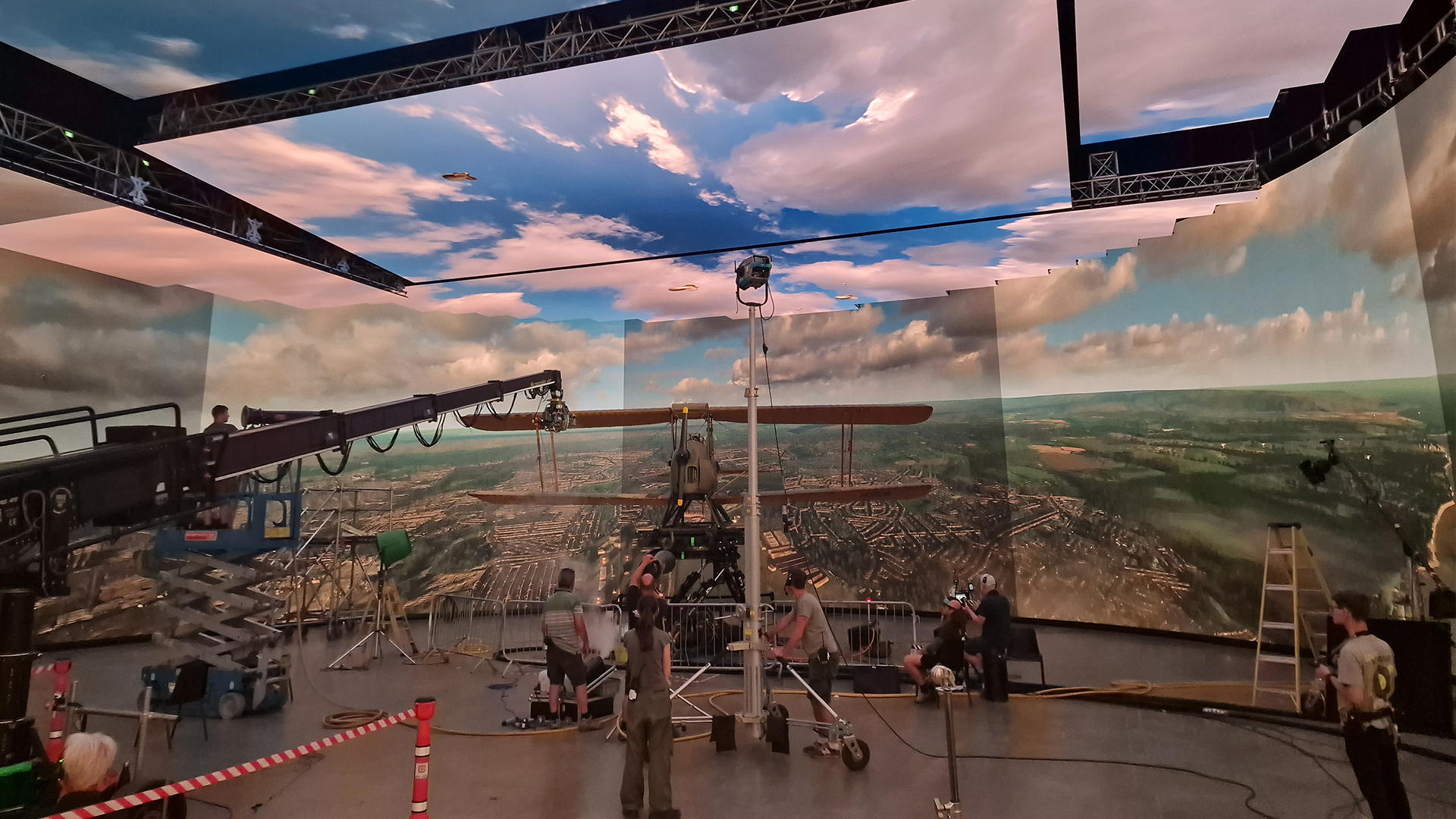
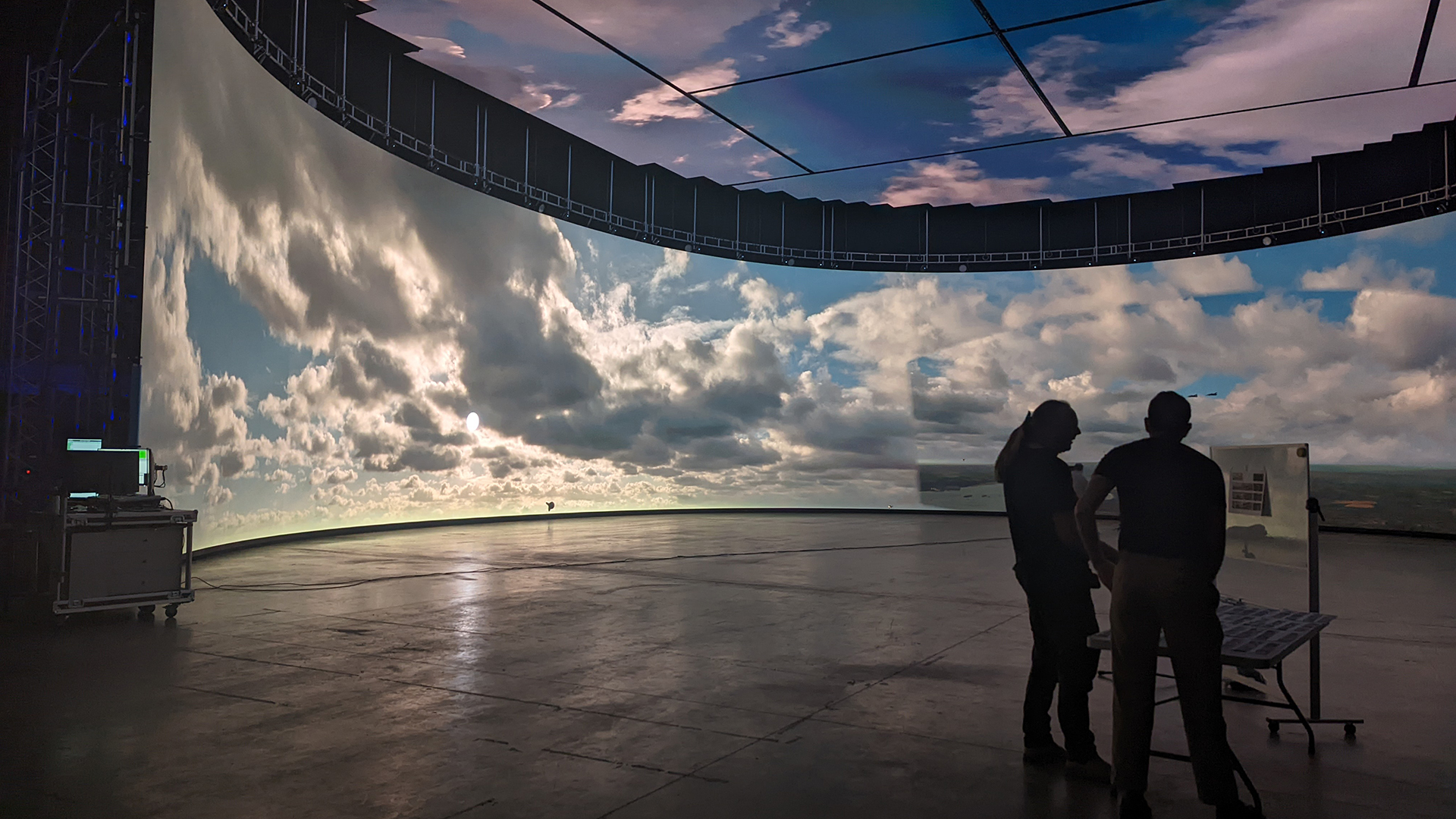
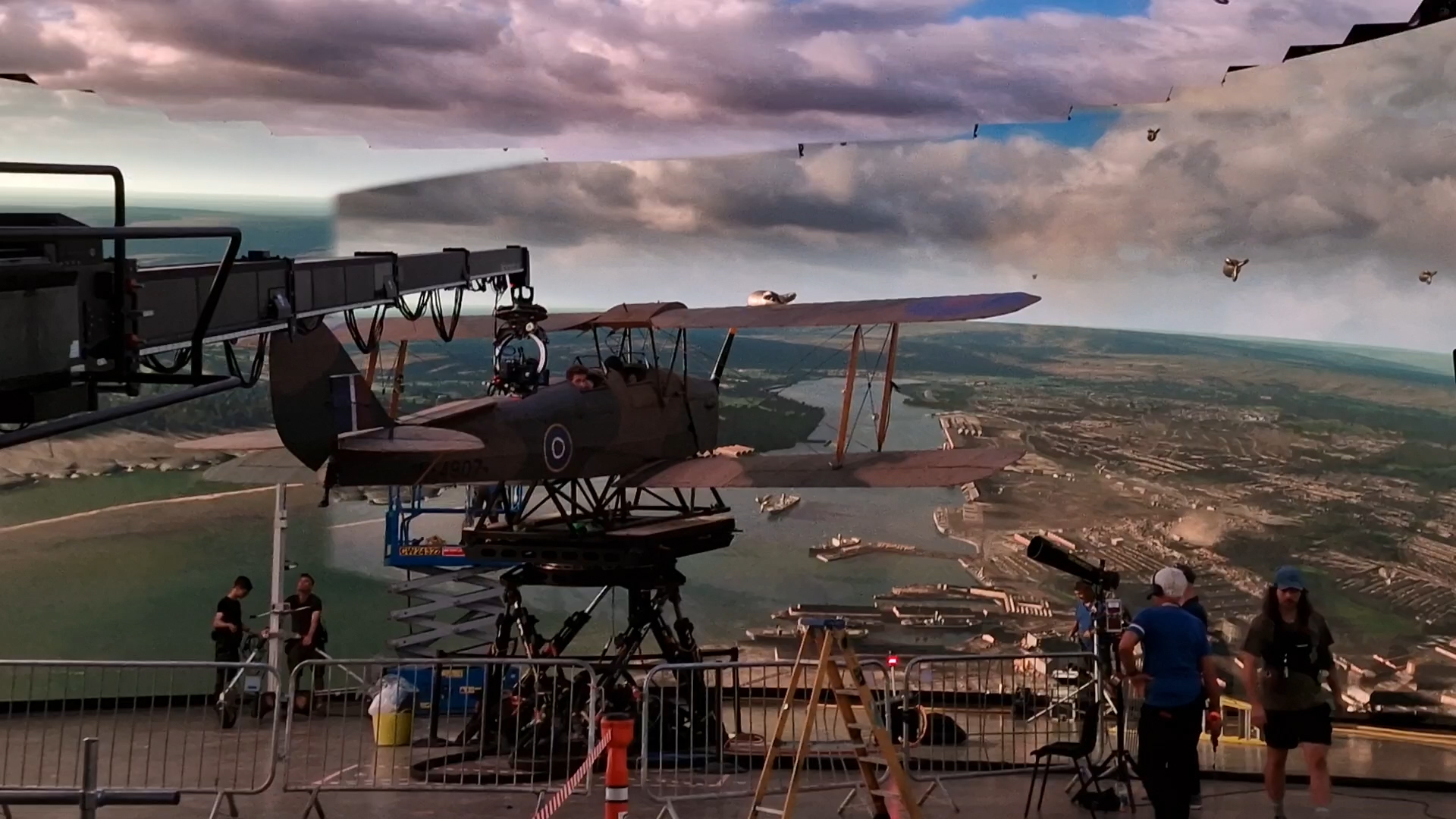
My biggest technical challenge was optimising these detailed environments to render photorealistically at 60fps on the vast, 360° wraparound LED stage at Warner Bros. Studios Leavesden, measuring 40 metres wide and 13 metres high. The stage accommodated a full-size replica of a de Havilland Tiger Moth mounted on a hydraulic, multi-axis gimbal motion platform.
I also developed joystick control of the entire environment, allowing us to position and move the digital world precisely in relation to the physical aircraft to create dramatic close-encounter shots. For a sequence in which the aircraft spun out of control, a colleague and I rewrote Unreal Engine’s motion-blur system to achieve buttery-smooth rotational blur.
I developed a comprehensive pre-visualisation (Previs) and technical visualisation (Techvis) tool in Unreal Engine to plan each shot. By modelling the camera position and the aircraft’s position on its hydraulic platform, I could establish the framing and determine how to position the digital landscape while keeping the stage’s ceiling and floor out of shot. Working with the director of photography, we used the tool to determine camera positions and lens choices ahead of the shoot, allowing us to set flight paths for each scene and plan the required coverage.
Having created the flight-path animations and lighting in Unreal Engine, I also served as the on-set VAD controller. My detailed knowledge of the environments allowed me to adjust shot setups quickly in response to the director and director of photography.