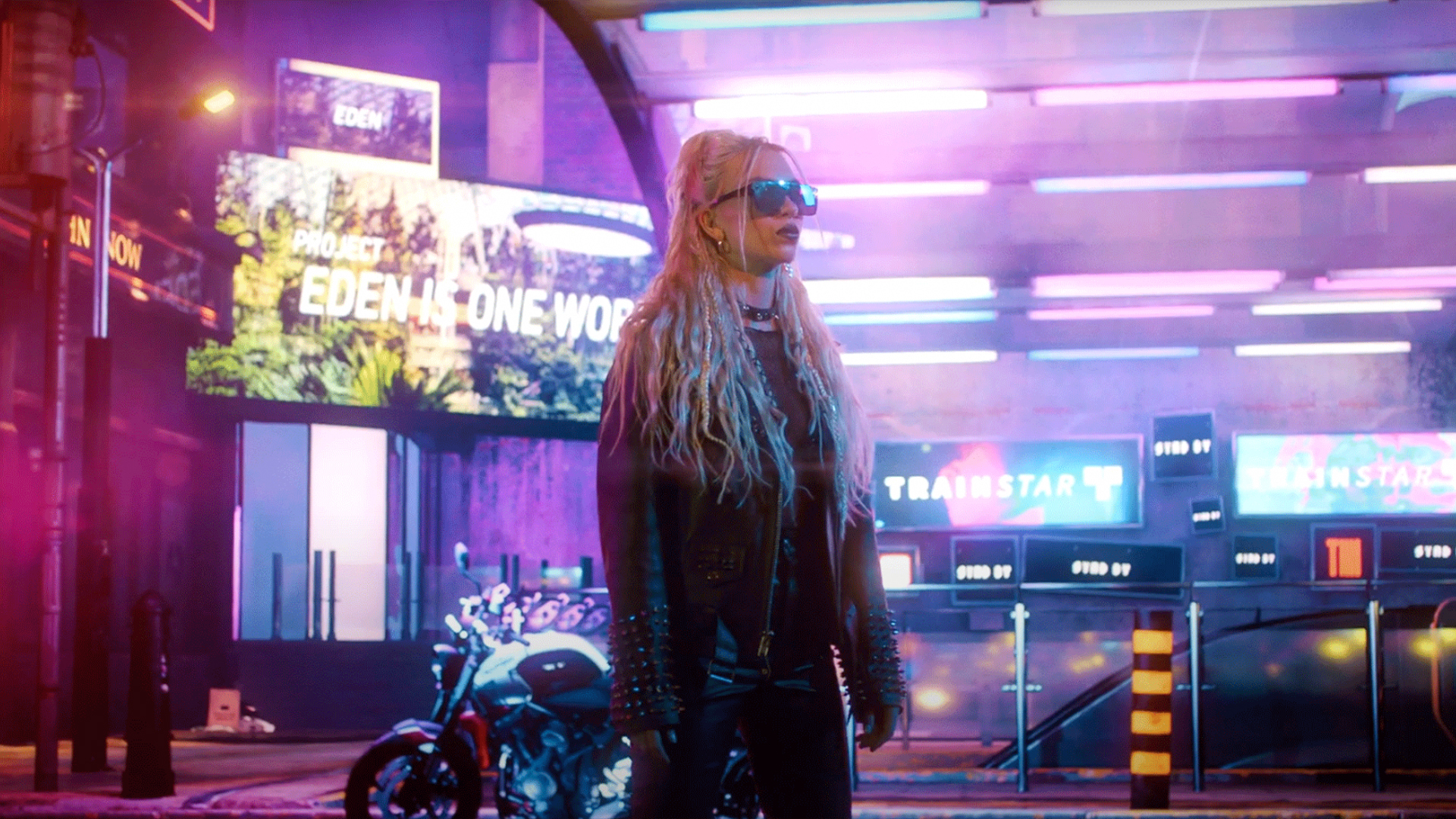
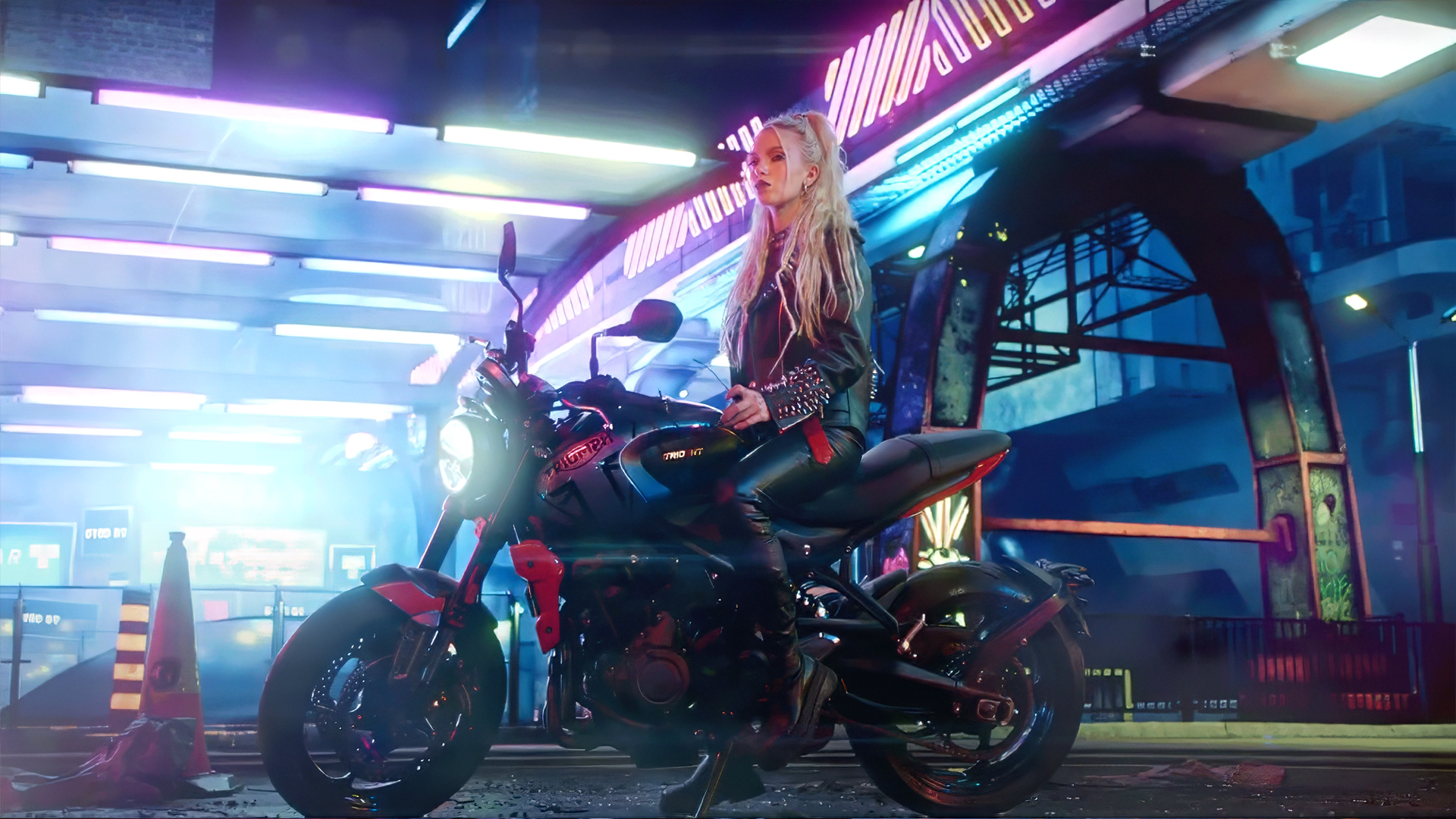
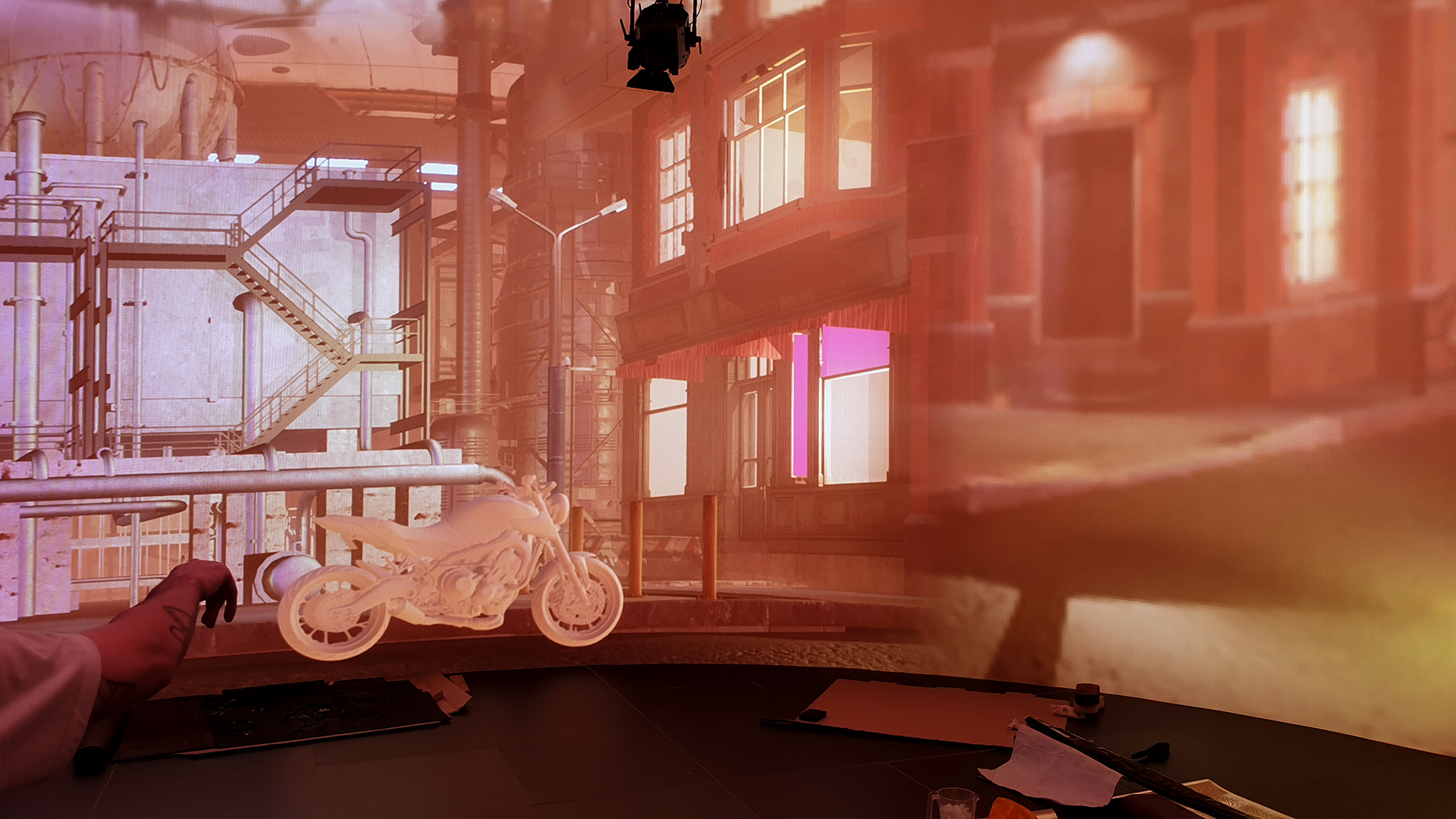
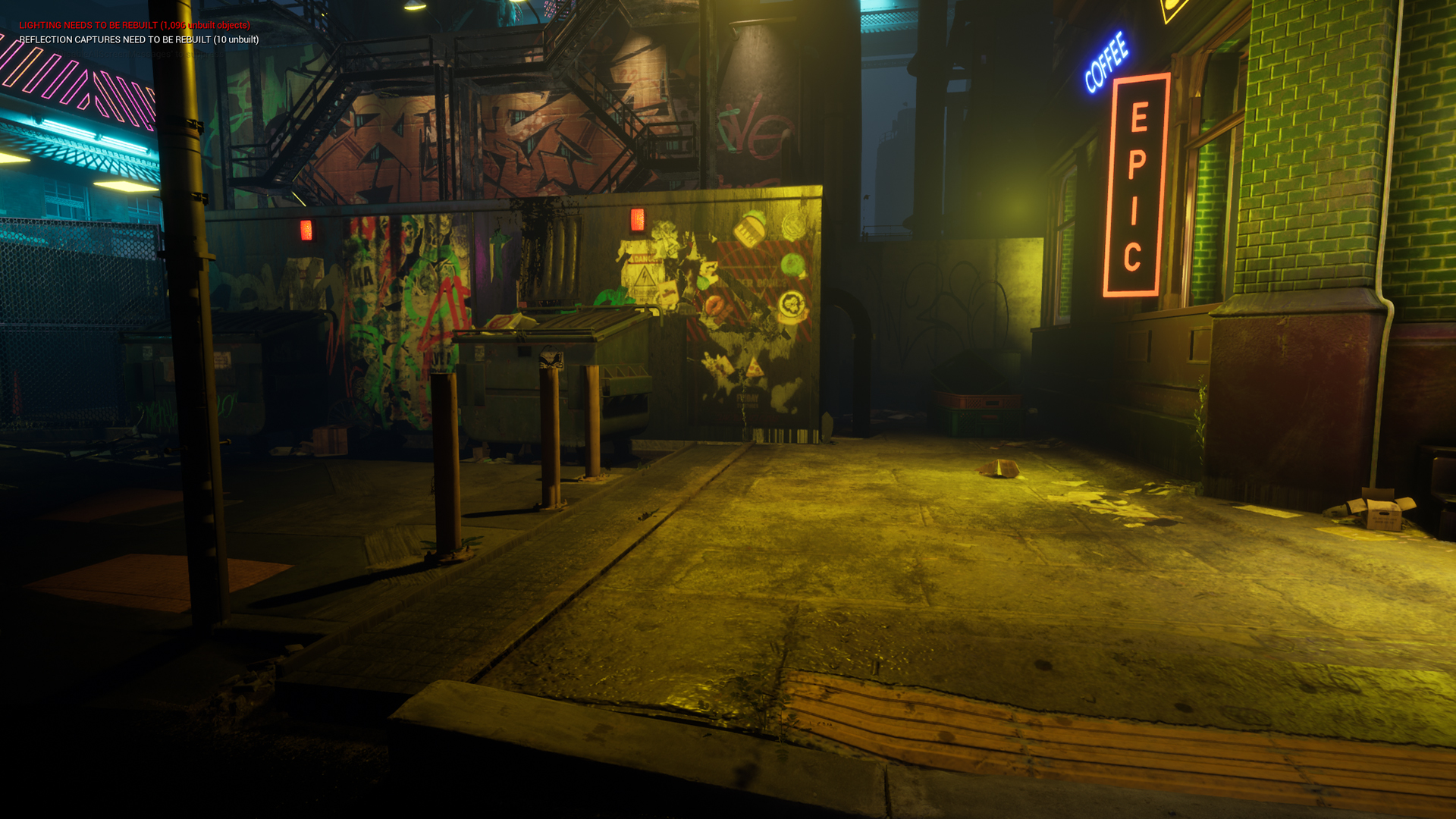
As Territory Studio’s Virtual Art Department and Creative Technology Director, I led the studio’s VAD team in partnering with Imagination, Epic Games and Triumph Motorcycles to create a cyberpunk-themed short film demonstrating virtual production techniques on a smaller volume.
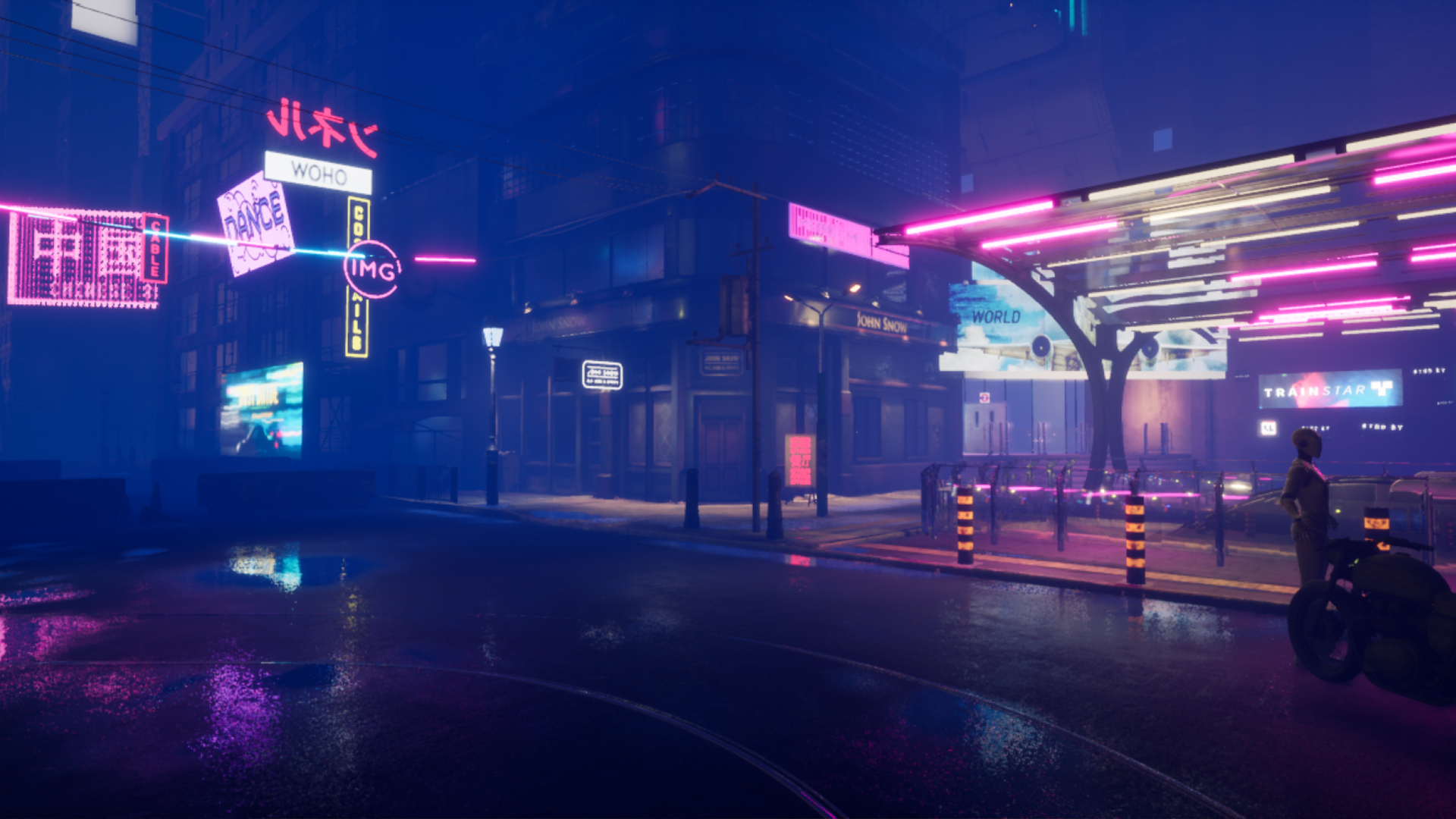
The Creative Director and I both felt a London cyberpunk city would make an interesting setting, since we were filming there and all lived in the city. We simply asked: what would London look like if all the classic metropolis cyberpunk world-building had happened there? We took the three tiers of cyberpunk city-building—the street level, the well-to-do middle class, and the elites in their “Ivory Towers”—and applied them to London, and then added lots of neon.
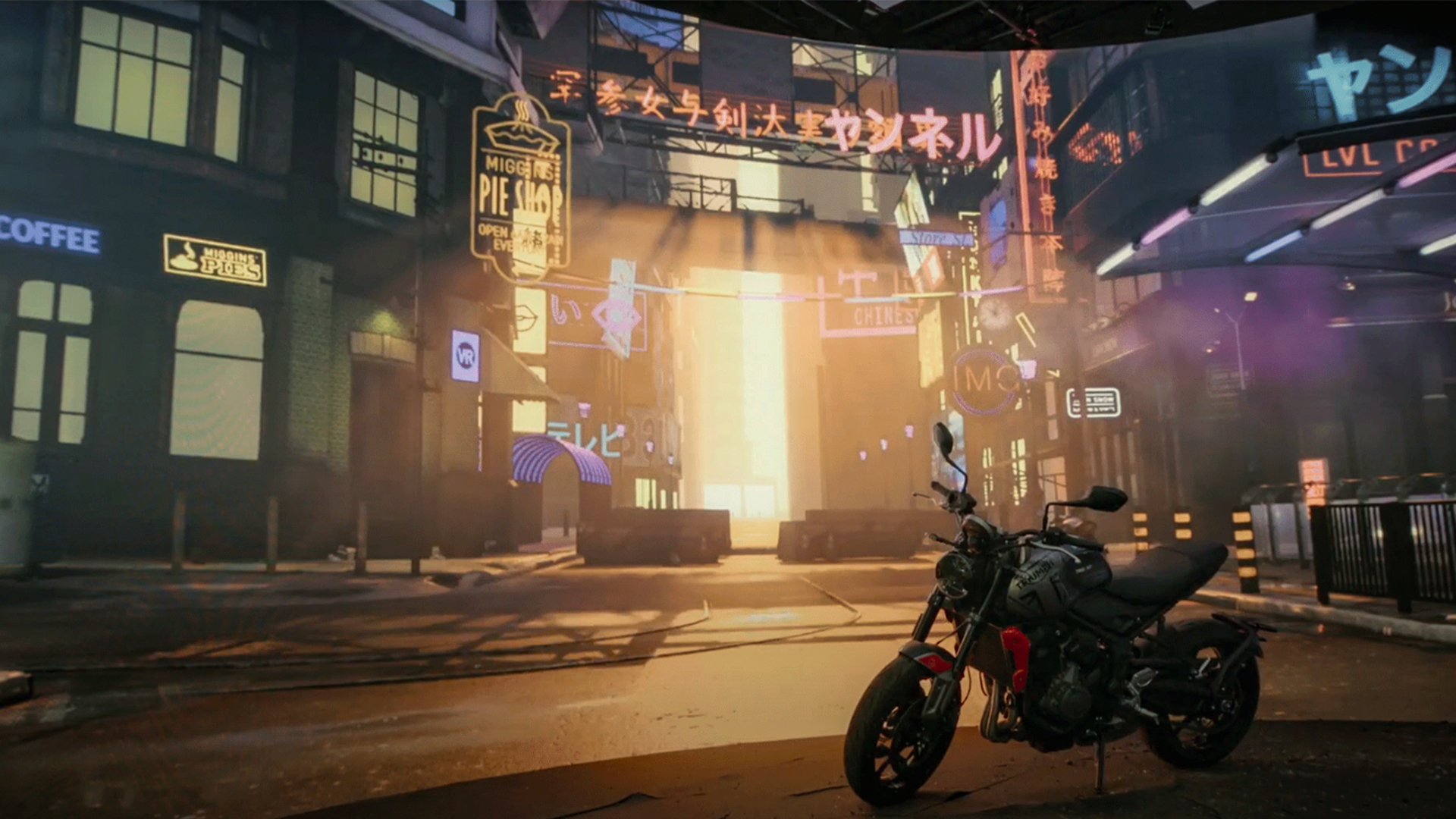
Coverage of the street-level scene expanded from the original simple shots—a 180-degree arc—to a full multi-location 360-degree set in the same single street, filmed from every angle, including drone-style shots. We now had to build a huge section of city to create a sense of scale.
I took extensive reference photography of London streets to capture the city’s authentic grime and history. London is still a city of many historical layers today, and we wanted to keep them all in to ground the work’s authenticity.
Briefing the art team on what the Creative Director and I wanted to achieve, we built a huge range of London assets from scratch in Unreal Engine 4, blended with kitbash packs and surface decals for grime and graffiti.
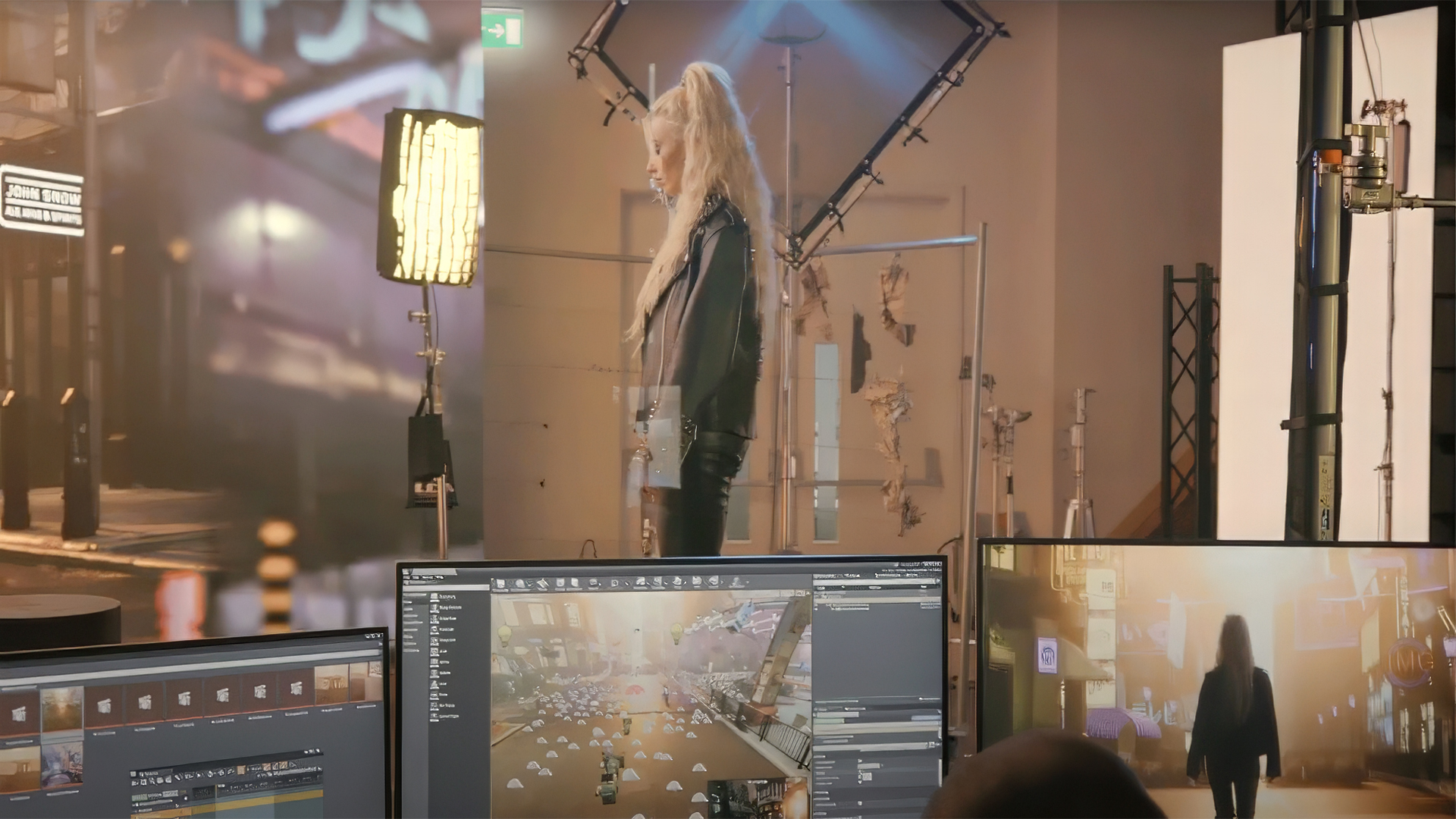
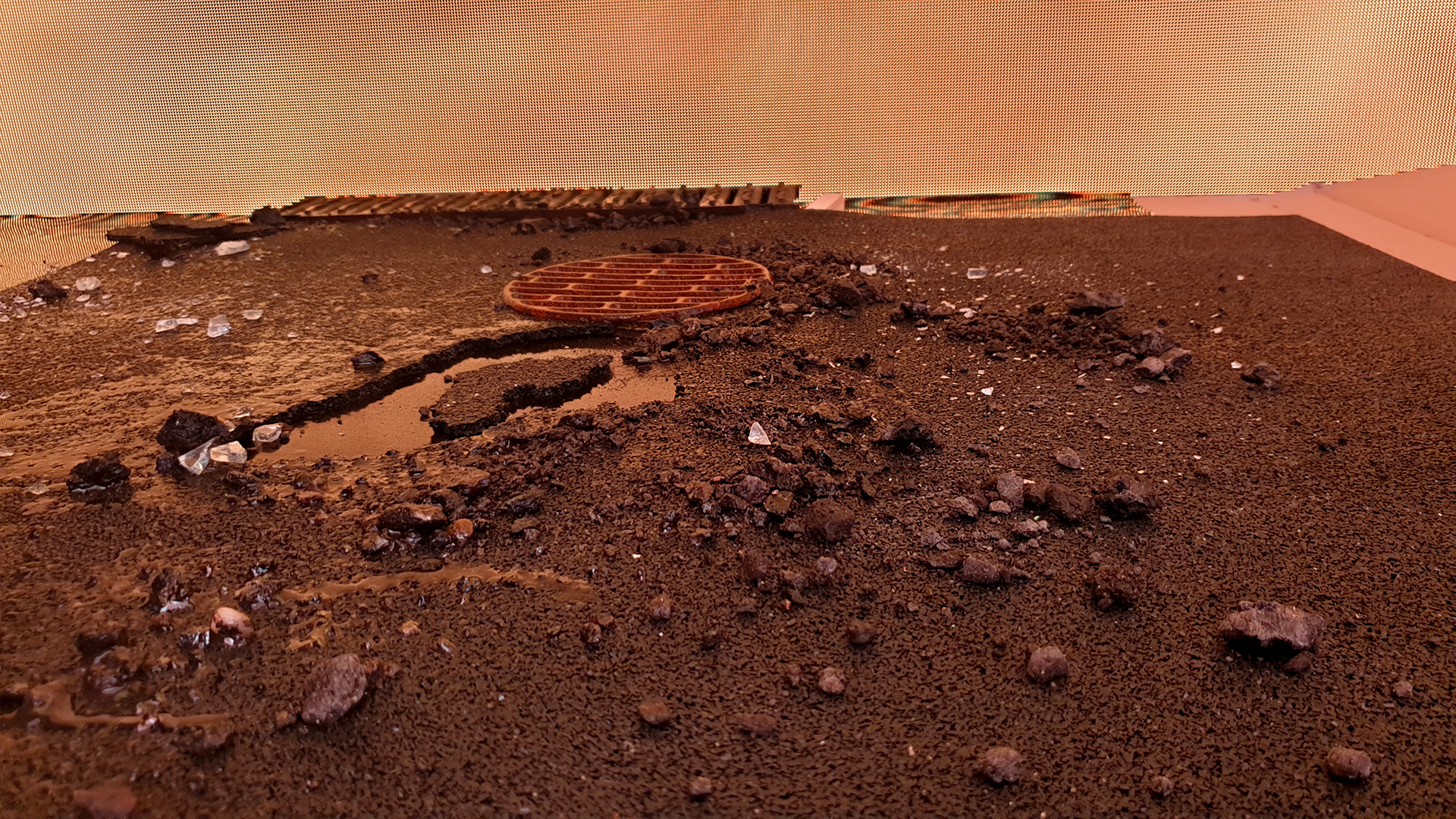
I took on the key technical art challenge: working with the Production Designer to create a seamless blend between the physical and virtual streets, as shots constantly flipped between the two.
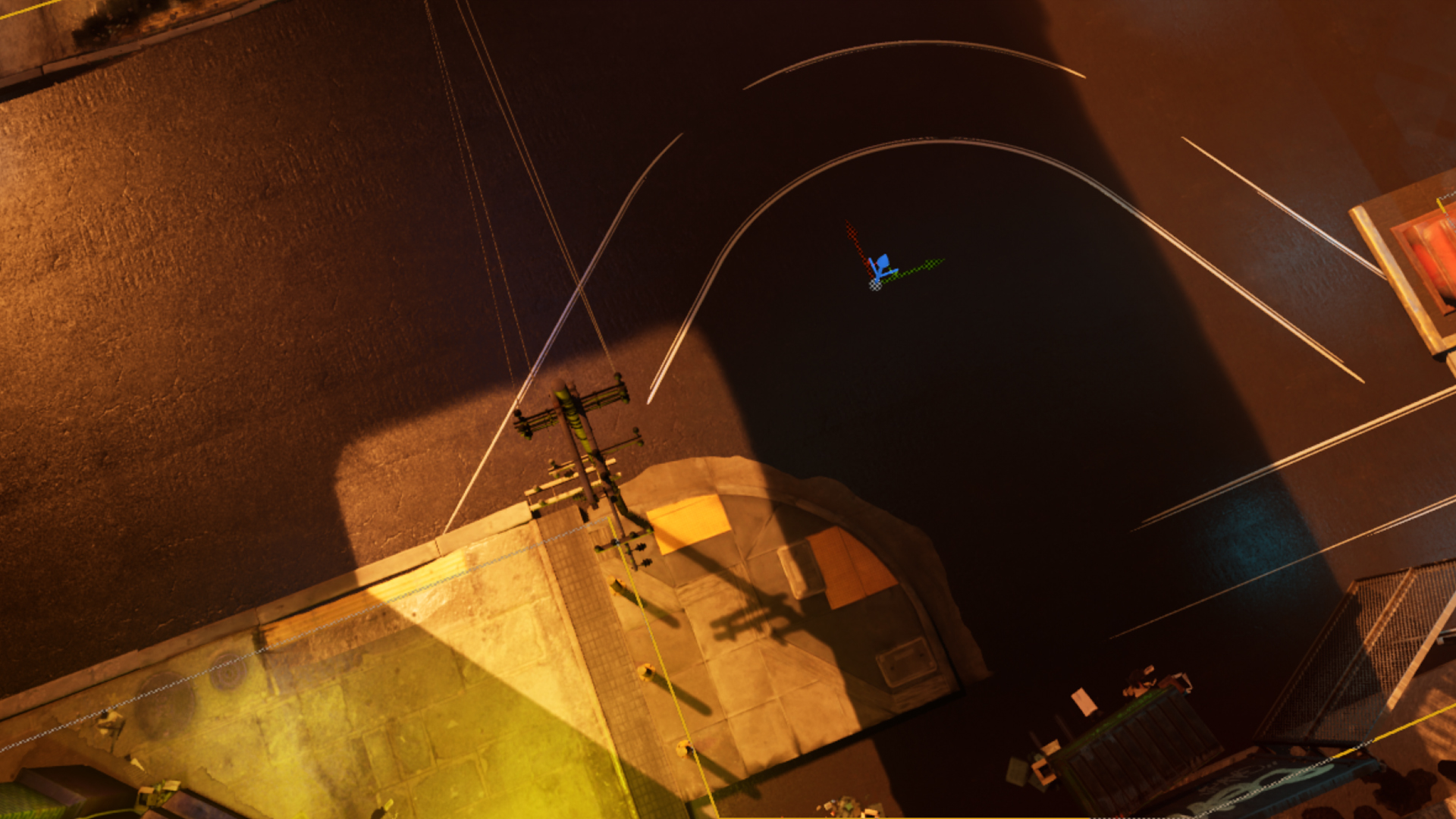
I solved the boundary between the curved LED volume and the physical set by drawing on a piece of real London history. A tram-line railway rail provided a virtual high-contrast element with a strong metallic specular to draw the eye, while a shadow pit concealed the gap between the physical and virtual sets. It worked very well, and because the rail was live position-editable, we could simply tweak its alignment on set to blend the edge.
We used photogrammetry and scanned textures to create digital twins of the street furniture, and also built a complete digital twin of the hero motorbike.
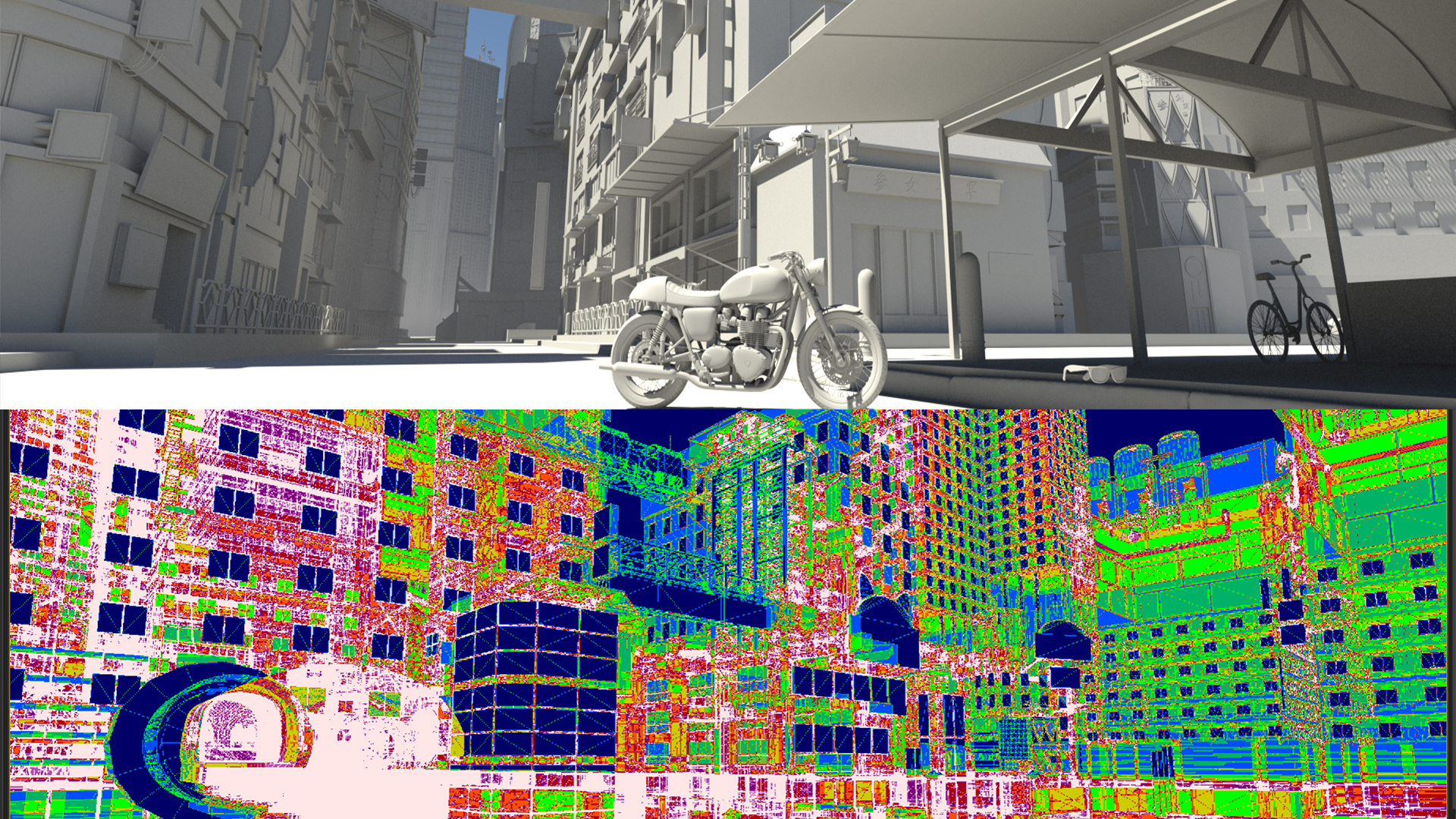
Performance and photorealism are crucial for 3D scenes in virtual production, so much of the work involved simplifying and optimising scene elements for mid- and deep-field shots. Fake multilayer glass in the skyscrapers used cube maps for Interior Mapping, while Pixel Depth Offset (PDO) and Parallax Occlusion Mapping (POM) together simulated 3D geometry in real time on the GPU.
Since lighting is key to cyberpunk, we relied heavily on baked lighting and volumetrics, reserving dynamic light for shots that needed the flexibility. The main sun was fully dynamic, so we could adjust exactly how its god rays played across the ground and through the architecture. We also made some of the architecture live-editable, allowing fine lighting art direction on set with the Director of Photography.